
Islam and its Connection to Slavery
How the Islamic Caliphates and schools of thought encouraged the enslavement of people
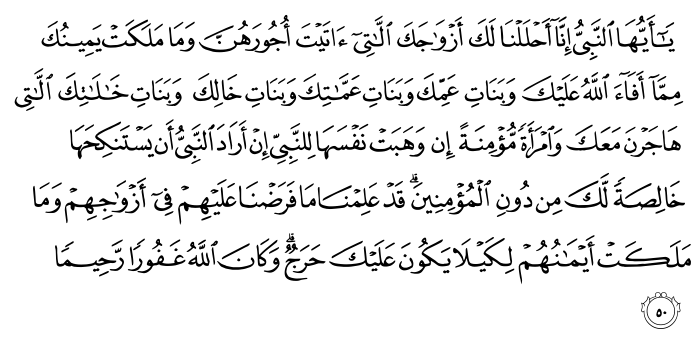 |
| Sura 33:50 |
This verse talks about the women being enslaved by soldiers in a time of war or during raids. The men are to keep them as wives or concubines. The women had no control over their body in this case. This verse was used in justfication of when this occurred in holy wars throughout Africa. Another religious verse comes from Sura 24:32. This also talks about the limits of the woman's freedoms. There were many other versus that talked about slavery and one of them was Sura 2:178.
"Retaliation is prescribed for you in the matter
of the murdered; the freeman for the freeman, and the slave for the slave, and
the female for the female"
 |
| A Hadith |
Hadiths were stories or lessons that were passed down from Islamic Scholars in the 7th and 8th centuries. I found this translated translated on the University of Southern California's website. One of the stories talks about a man going into slavery for not paying an outstanding debt to someone (sounds a lot like indentured servitude).

<====== This guy is Ibn Battuta, one of my other primary sources.
He was a merchant that kept a record of his travels throughout the 14th century. He described the importance of slave raids in the Kilwa Sultanate during the 14th century.
"The Sultan of Kilwa ... was called ["the
generous"] ... on account of the multitude of his gifts and acts of
generosity. He used to engage frequently in expeditions to the land of the Zinj
people [in the villages inland from the coast], raiding them and taking booty,
and he would set aside the fifth part of it to devote to the [religious
"tax" required in the Koran]."
The Zinj people would be enslaved and sold for profit and this profit was given back to the religious tax required by Sharia at that time.


No comments:
Post a Comment